- info@irosm.com
- 3333 West Commercial Blvd , Ste 101 Fort Lauderdale , Fl, 33309

A spine fracture, most often a compression fracture, happens when one of the bones of the spine (a vertebra) cracks and partly collapses. It can cause sudden back pain, pain when standing or walking, and loss of height. In older adults with thin bones, it can happen after something as simple as a cough, a sneeze or lifting a bag.
At the Institute of Regenerative Orthopedics & Sports Medicine (IROSM), Dr. Michael Erdman at IROSM in Fort Lauderdale treats spinal compression fractures with pain control, a back brace when it helps, and kyphoplasty when it fits. Kyphoplasty places bone cement in the broken bone.
Book Your Appointment Now: (954) 751-6990 Make an Inquiry Online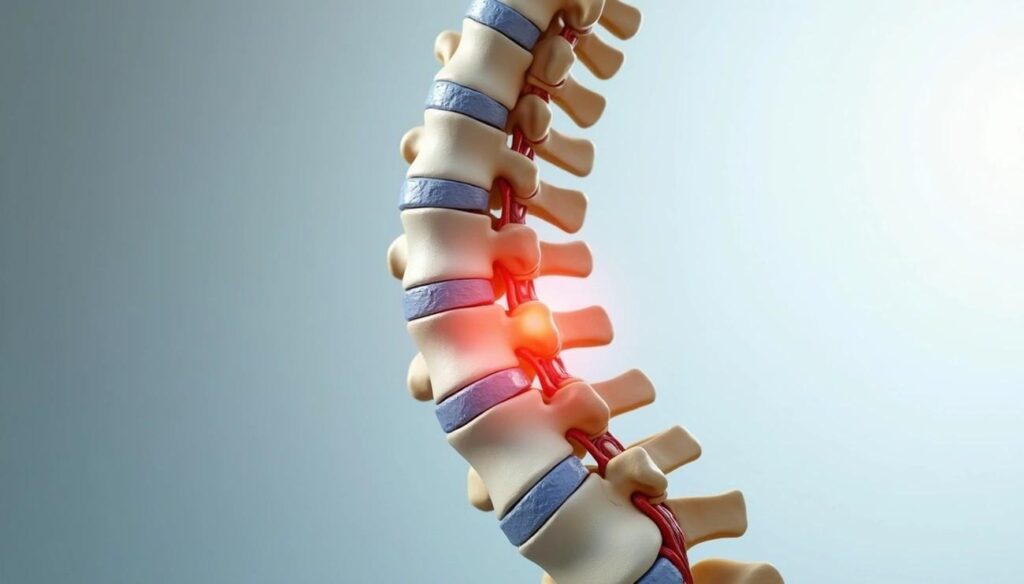
A spinal compression fracture is a break in which one of the bones of the spine (a vertebra) cracks and partly collapses. It is most often caused by osteoporosis, a condition that makes bones thin and weak.
Each vertebra has a thick front part called the vertebral body, which carries most of your weight. In a compression fracture, the front of the vertebral body crushes down and becomes wedge-shaped, while the back of the bone usually stays intact. A fracture that breaks the bone into pieces and pushes into the spinal canal is called a burst fracture, and it is usually more serious.
Is a fracture the same as a break? Yes. Doctors use the word fracture for any broken bone, from a small crack to a complete break.
Most compression fractures are stable and heal without surgery, but they should never be ignored. A fracture can make it hard to walk, sleep and care for yourself. Staying in bed for long periods also brings its own risks. A fracture is more serious when:
A compression fracture is also often the first sign of osteoporosis, and it raises the chance of another fracture (see the research below). Read more about life after a compression fracture, including the long-term outlook.
The most common cause. Osteoporosis means the bones have become thin and weak, so they can break during everyday activities. Some people do not notice the first fracture.
A fall from height, a car accident or a sports injury can fracture healthy bone. These fractures need prompt imaging to check that the spine is stable.
Less often, a fracture happens where bone has been weakened by another condition, such as a tumor, infection or long-term steroid use.
Yes. In an older adult with weak bones, even a simple fall from standing height can cause a compression fracture. A slip in the bathroom is enough. In a younger person with healthy bones, it usually takes a bigger force, such as a fall from a ladder or a car accident.
After a fall, get checked if back pain does not ease or makes it hard to stand, walk or get out of bed. An X-ray is usually the first test. Go to the emergency room after a serious fall, or if back pain comes with new weakness, numbness, or trouble controlling the bladder or bowels.
Compression fractures happen most often where the upper back (thoracic spine) meets the lower back (lumbar spine), at the T11, T12, L1 and L2 levels. This area is where the stiffer upper back joins the more mobile lower back, so it takes more stress when you bend and lift.
Fractures higher in the upper back (thoracic spine fractures) can add to a rounded, stooped posture over time. Learn more about thoracic back pain.
Go to the emergency room right away if back pain comes with new leg weakness, numbness in the groin or legs, or trouble controlling your bladder or bowels.
Dr. Erdman starts with your history and an exam, then reviews imaging. X-rays show whether a vertebra has lost height. An MRI shows whether the fracture is new or old and whether nerves are affected, which matters when deciding on treatment. A CT scan shows the bone in more detail. A bone density scan (DEXA) checks for osteoporosis.
On an X-ray, doctors often grade a compression fracture by how much height the bone has lost. Mild means about 20 to 25 percent, moderate about 25 to 40 percent, and severe more than 40 percent.
Healing time is different for everyone. Many compression fractures heal on their own, and the pain often eases as the bone heals. How long it takes depends on age, bone strength, the type of fracture and other health problems.
Dr. Erdman checks healing with follow-up visits and, when needed, X-rays. If pain does not ease, an MRI can show whether the fracture has not healed. For some of these fractures, kyphoplasty may be considered.
Many compression fractures are treated without surgery. Options at IROSM in Fort Lauderdale may include:
A back brace can support the spine and ease pain while it heals. For a T12 or L1 fracture, this is often a thoracic or lumbar brace (for the middle or lower back). You also get safe limits for walking and lifting.
Medicine and targeted treatments to keep you moving, since staying in bed for long periods has its own risks.
For a painful fracture that is not improving, a minimally invasive procedure that places bone cement in the vertebra. See kyphoplasty in Fort Lauderdale.
Checking and treating osteoporosis with your primary care doctor or specialist to lower the chance of another fracture.
Unstable fractures, burst fractures and fractures that press on nerves may need spine surgery. If that is the case, Dr. Erdman will explain why and help with a referral. Read more in when spine fracture surgery is necessary.
For an older adult, treatment aims to control pain, keep them moving safely and prevent the next fracture. It often includes:
Family members can call (954) 751-6990 to ask about scheduling and how the evaluation works. Dr. Erdman speaks English and Spanish.
A back brace may be used for comfort and support while a stable compression fracture heals. For a T12 or L1 fracture, this is often a brace for the middle or lower back. How long to wear it depends on the fracture and how the pain changes, so Dr. Erdman gives you a plan and checks it at follow-up visits.
Research on braces is limited. An expert review found it is unclear whether bracing improves daily function (see the research below). A brace is one part of care, not a replacement for staying active and treating bone health.
Some people have ongoing back pain after a fracture heals, from posture changes, tight muscles or arthritis in nearby joints. Dr. Erdman also evaluates low back pain and back pain with muscle spasms at IROSM in Fort Lauderdale.
Providing spinal compression fracture evaluation and treatment to residents in Fort Lauderdale, Oakland Park, Tamarac, Lauderdale Lakes, Plantation, Pompano Beach, and Broward County. Dr. Erdman speaks English and Spanish.
Institute of Regenerative Orthopedics & Sports Medicine (IROSM)
3333 West Commercial Blvd, Suite 101
Fort Lauderdale, FL 33309
Phone: (954) 751-6990
Board-certified in family medicine · Fellowship-trained in interventional spine and pain medicine · Fort Lauderdale & Hialeah
Schedule a consultation with Dr. Michael Erdman at IROSM in Fort Lauderdale to review your imaging and find the right treatment for your spinal compression fracture. Same-week appointments are usually available.
Book Your Appointment Now: (954) 751-6990 Make an Inquiry Online
Disclaimer: This content is for general educational purposes and does not constitute formal medical advice. Individual patient outcomes will vary. Spine fracture treatment at IROSM in Fort Lauderdale requires a clinical examination by Dr. Michael Erdman to establish candidacy. Serving Fort Lauderdale, Pompano Beach, Plantation, and surrounding Broward County communities.