- info@irosm.com
- 3333 West Commercial Blvd , Ste 101 Fort Lauderdale , Fl, 33309
Most broken bones heal in a few months. When a fracture is still painful and the X-ray shows the break has not closed, it may be a delayed union or a non-healing fracture (nonunion). This can happen after a cast, a boot, or even surgery.
At the Institute of Regenerative Orthopedics & Sports Medicine (IROSM), Dr. Jorge Gonzalez, MD at IROSM in Fort Lauderdale reviews why a fracture is slow to heal and whether a non-surgical, image-guided option such as an intraosseous injection may be worth considering.
Book Your Appointment Now: (954) 751-6990 Make an Inquiry Online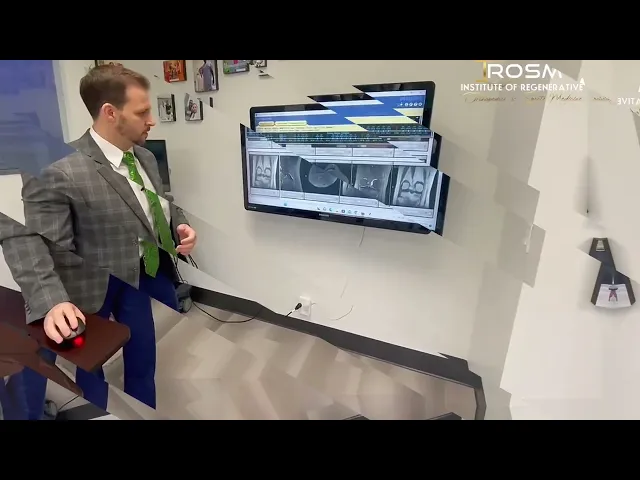
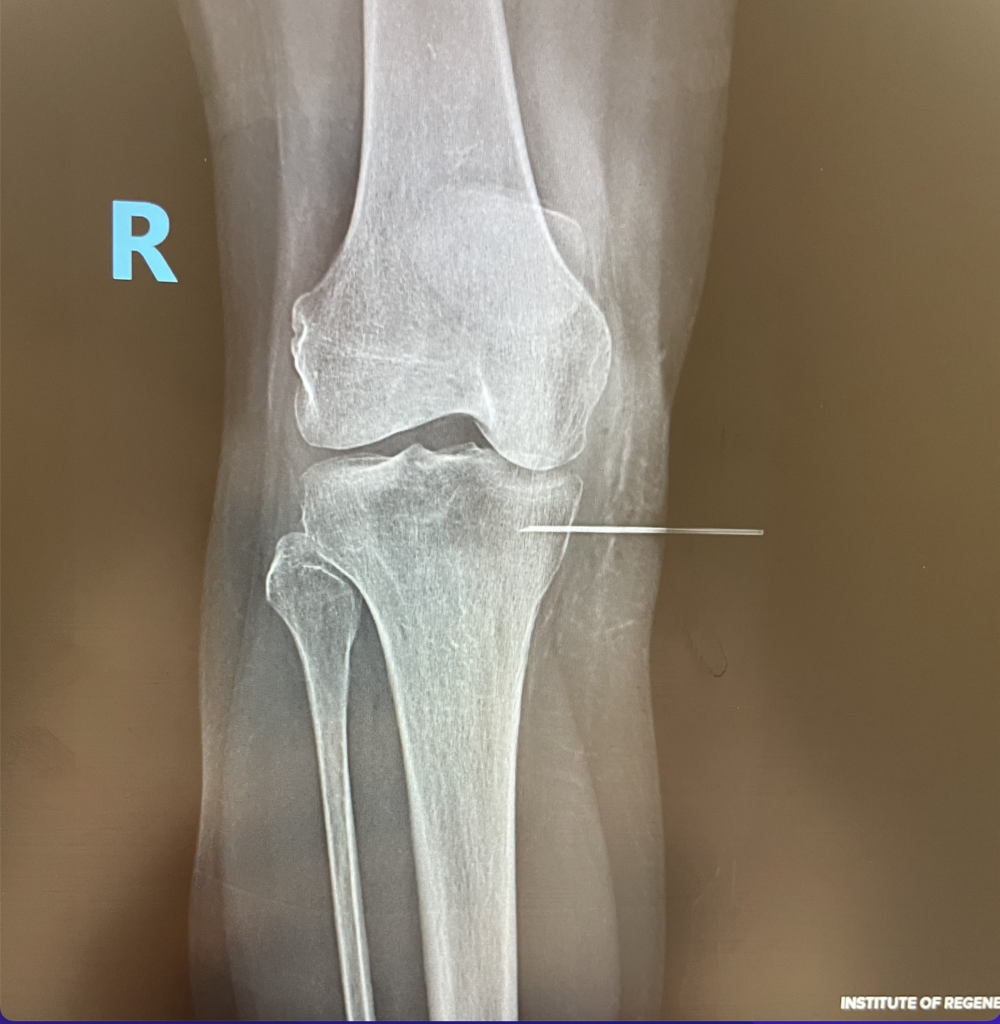
A non-healing fracture, called a nonunion, is a broken bone that has stopped making progress toward healing. A delayed union is a fracture that is healing more slowly than expected but may still heal. Doctors decide which one you have by comparing X-rays over time and by how the area feels and works.
Signs of a non-healing fracture include pain at the break that does not ease, pain when you put weight on it, movement or clicking at the fracture site, and X-rays that still show a gap. Dr. Gonzalez evaluates slow-healing fractures at IROSM in Fort Lauderdale to confirm the diagnosis and find what is holding healing back.
Some bones, like the scaphoid in the wrist and parts of the tibia, have a weaker blood supply and are more likely to heal slowly. Finding and fixing these factors is part of every non-healing fracture plan at IROSM in Fort Lauderdale.
Not every non-healing fracture needs surgery. Depending on the bone, the gap and your health, non-surgical options at IROSM in Fort Lauderdale may include:
A brace, boot or change in weight-bearing can reduce movement at the break so healing can continue.
Stopping smoking, checking vitamin D and blood sugar, and reviewing medicines can remove barriers to bone healing.
An image-guided injection placed directly into the bone at the fracture site, using your own (autologous) biologic material prepared in our Advanced Regenerative Lab. Learn more about intra-osseous injection.
Some patients are offered a home bone stimulator that uses ultrasound or electrical signals. Research on how much it helps is mixed.
Non-surgical treatment for a non-healing fracture is not right for every patient, results vary, and candidacy is decided at an in-person evaluation.
An intraosseous injection places treatment inside the bone rather than around it. At IROSM in Fort Lauderdale, Dr. Gonzalez performs the injection under local numbing, using ultrasound and X-ray guidance to reach the fracture site. The goal is to support the body’s own healing response in a bone that has stalled.
Intraosseous injections are also used for some cases of arthritis with bone bruising seen on MRI and some bone stress problems. Evidence for injections in non-healing fractures is still developing, so Dr. Gonzalez explains what is known before recommending one. In the video at the top of this page, he explains non-surgical options for a non-healing fracture.
Surgery is often needed when there is a large gap, the bone ends are out of line, hardware has failed, or there is an infection. Surgical options include fixing the bone with plates, screws or a rod and adding bone graft. If surgery is the better fit for your fracture, Dr. Gonzalez will explain why and help with a referral to an orthopedic surgeon.
For fractures of the spine, see spine fracture treatment in Fort Lauderdale and kyphoplasty, which are handled by our interventional spine team.
Non-healing fractures are usually treated by orthopedic doctors. At IROSM in Fort Lauderdale, triple board-certified Dr. Jorge Gonzalez focuses on image-guided, non-surgical and regenerative care and works with orthopedic surgeons when surgery is the better option. Bring your recent X-rays, any CT or MRI reports, and your surgery notes if you have had an operation. Learn about related stem cell therapy in Fort Lauderdale.
Providing non-healing and slow-healing fracture evaluation and treatment to residents in Fort Lauderdale, Oakland Park, Tamarac, Lauderdale Lakes, Plantation, Pompano Beach, and Broward County. For our Hialeah office, se habla español.
Institute of Regenerative Orthopedics & Sports Medicine (IROSM)
3333 West Commercial Blvd, Suite 101
Fort Lauderdale, FL 33309
Phone: (954) 751-6990
Triple board-certified · Fellowship-trained at the Andrews Institute · Fort Lauderdale & Hialeah
Schedule a consultation with Dr. Jorge Gonzalez at IROSM in Fort Lauderdale. Bring your X-rays and reports so he can review why your fracture is slow to heal and which treatment is right for you.
Book Your Appointment Now: (954) 751-6990 Make an Inquiry Online
Disclaimer: This content is for general educational purposes and does not constitute formal medical advice. Individual patient outcomes will vary. Non-healing fracture treatment at IROSM in Fort Lauderdale requires a clinical examination by Dr. Jorge Gonzalez to establish candidacy. Serving Fort Lauderdale, Pompano Beach, Plantation, and surrounding Broward County communities.