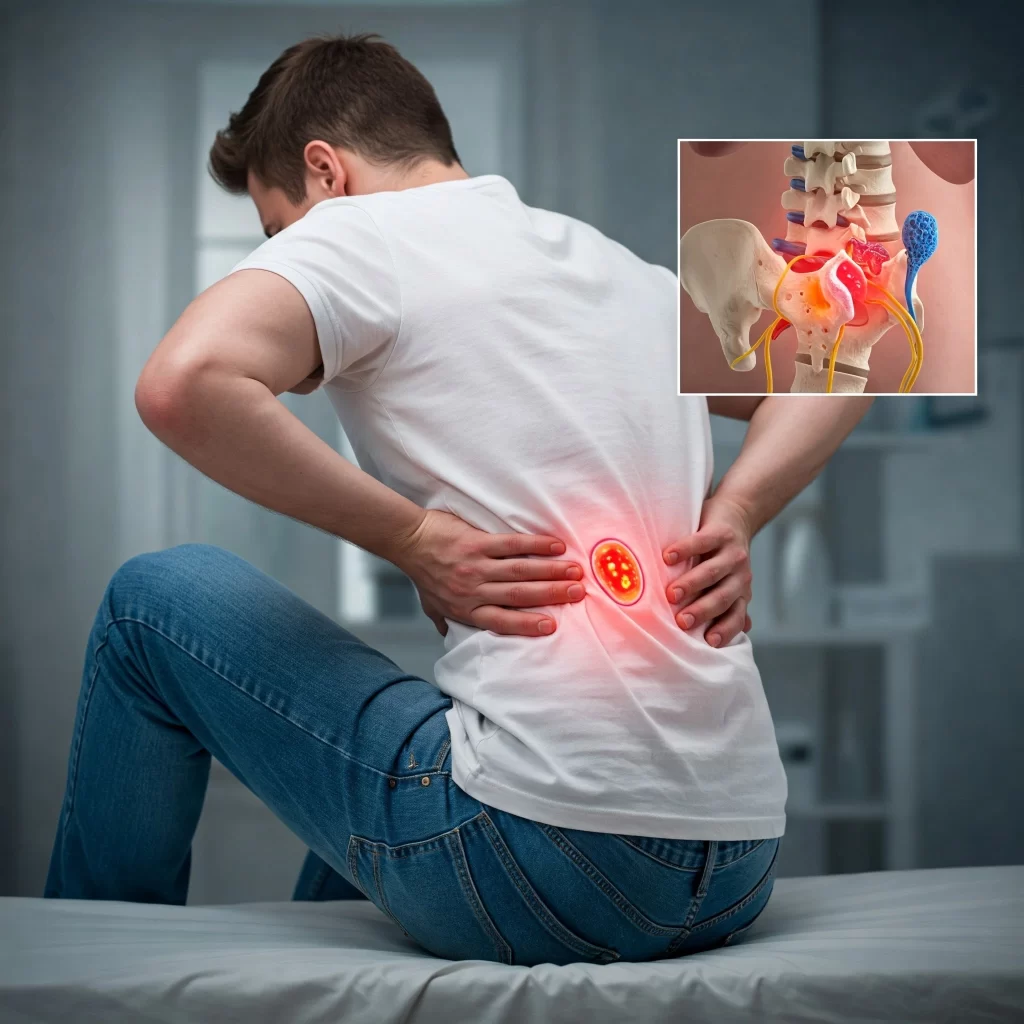
An honest guide to spine fracture surgery from Dr. Michael Erdman, fellowship-trained in interventional spine and pain
A spine fracture is a break in one of the bones of the spine, called vertebrae. It can happen in a fall, a car accident or a sports injury, or with very little force when bones are weak from osteoporosis.
Most spine fractures heal without surgery. Dr. Michael Erdman at IROSM in Fort Lauderdale explains which fractures need surgery, what the surgery involves, and what care can help when surgery is not needed.
Important Notice from IROSM: This guide is for general education. Your plan depends on your imaging and exam. After an exam at IROSM in Fort Lauderdale, Dr. Michael Erdman will tell you which option fits your spine, including when a spine surgeon should see you.
Types of Spine Fractures
Compression Fracture
The front of the bone collapses, often from osteoporosis. This is the most common type and is usually stable.
Burst Fracture
The bone breaks in several places from a strong force, such as a fall from a height. Pieces can push toward the spinal cord.
Flexion-Distraction (Chance) Fracture
The spine is pulled apart when the body is thrown forward, often in a car crash with a lap belt.
Fracture-Dislocation
The bone breaks and the spine shifts out of line. This is a severe injury that often damages nerves.
Stable fractures, where the spine can still support the body safely and the nerves are not pinched, are usually treated without surgery. Care may include:
A back brace: to support the spine and limit painful movement while the bone heals.
Pain control: medicine, and for some people guided injections, so you can stay active.
Walking and therapy: staying active and building core strength as your doctor allows.
Bone health: a bone density test and treatment for osteoporosis, to help prevent the next fracture.
When Is Surgery Needed for a Spine Fracture?
Doctors think about surgery when one or more of these is true:
The spine is unstable: it cannot safely support the body, or the break is likely to shift.
The spinal cord or nerves are pinched: signs include weakness, numbness, or loss of bladder or bowel control.
Bone pieces push into the spinal canal and press on the nerves, as can happen in a burst fracture.
The spine is bending forward more and more: a growing hunch, called kyphosis.
Pain stays severe despite bracing, medicine and time. For some compression fractures, this is when kyphoplasty may be considered.
What Is Surgery for a Burst Fracture of the Spine?
Many burst fractures without nerve problems are treated with a brace. When surgery is needed, a spine surgeon usually does one or both of these:
Stabilization (fixation and fusion): screws and rods hold the broken area still, and bone graft helps the bones grow together.
Decompression: bone pieces or tissue pressing on the spinal cord or nerves are removed.
These are open spine surgeries done in a hospital. At IROSM, Dr. Erdman checks whether you need a surgeon and helps with the referral.
Kyphoplasty for Compression Fractures
Kyphoplasty is a minimally invasive procedure for painful compression fractures. Through a small needle, a balloon makes space in the collapsed bone, and bone cement is injected to support it. It is done with X-ray guidance. Dr. Erdman offers kyphoplasty at IROSM in Fort Lauderdale for some patients whose pain has not improved with bracing and medicine. Learn more about kyphoplasty in Fort Lauderdale.
Recovery After a Spine Fracture
Recovery depends on the type of fracture, your bone health and whether you had surgery. Most people start walking early, wear a brace for a period, and then build strength with therapy. Your doctor will check healing with follow-up X-rays and tell you when to return to normal activities.
Go to the emergency room after a fall or accident if you have severe back pain, weakness or numbness in the legs, or loss of bladder or bowel control. See also mid-back pain treatment and non-healing fractures.
What the Research Says About Spine Fracture Surgery
Stable burst fractures without nerve problems: A study randomly split 47 people with a stable burst fracture where the mid and lower back meet, and no nerve problems, into surgery or a brace or cast. Years later, pain and function were similar in both groups. The group without surgery reported a little less disability, and complications were more common after surgery. Wood K, et al. Operative compared with nonoperative treatment of a thoracolumbar burst fracture without neurological deficit. A prospective, randomized study. J Bone Joint Surg Am. 2003;85(5):773-781. View the study.
Spine Fracture Care in Fort Lauderdale
Providing spine fracture evaluation, bracing, pain care and kyphoplasty to residents in Fort Lauderdale, Oakland Park, Tamarac, Plantation, Pompano Beach, and Broward County. For our Hialeah office, se habla español.
Institute of Regenerative Orthopedics & Sports Medicine (IROSM)
3333 West Commercial Blvd, Suite 101
Fort Lauderdale, FL 33309
Phone: (954) 751-6990
Frequently Asked Questions About Spine Fracture Surgery
Do all spine fractures need surgery?
Do all spine fractures need surgery?
No. Most spine fractures, especially stable compression fractures, heal with a brace, pain control and activity. Surgery is used when the spine is unstable or the nerves are pinched.
What is surgery for a burst fracture of the spine?
What is surgery for a burst fracture of the spine?
When needed, a spine surgeon holds the broken bones still with screws and rods, and may remove bone pieces pressing on the nerves. Many burst fractures without nerve problems are treated with a brace instead.
How long does it take to recover from a spinal fracture?
How long does it take to recover from a spinal fracture?
It depends on the fracture, your bone health and whether you had surgery. Your doctor checks healing with follow-up X-rays and tells you when you can return to normal activities.
Are compression fractures serious?
Are compression fractures serious?
Many are mild and heal with care. Severe collapse, pain that does not ease, or more than one fracture needs a closer look, and kyphoplasty may be an option for some.
What symptoms suggest nerve damage after a spine fracture?
What symptoms suggest nerve damage after a spine fracture?
Numbness, tingling, weakness in the legs, pain down the leg, or trouble controlling the bladder or bowels. These need urgent care.
Can osteoporosis cause spine fractures?
Can osteoporosis cause spine fractures?
Yes. Weak bones can break with very little force, even from bending or lifting. A bone density test and treatment help lower the risk of another fracture.
Do I need a referral to be seen at IROSM?
Do I need a referral to be seen at IROSM?
It depends on your insurance. Many HMO, Medicare Advantage and Medicaid plans need a referral from your primary care doctor before you see a specialist. Please check with your plan, or call us at (954) 751-6990 before your visit to confirm.
Find Out if Your Spine Fracture Needs Surgery
Board-certified · Fellowship-trained in interventional spine and pain · Fort Lauderdale & Hialeah
Schedule a consultation with Dr. Michael Erdman at IROSM in Fort Lauderdale for a full review of your imaging and a clear plan. Same-week appointments are usually available.
Medically reviewed by:Dr. Michael Erdman Institute: Institute of Regenerative Orthopedics & Sports Medicine (IROSM)
Last reviewed: September 2026
Disclaimer: This content is for general educational purposes and does not constitute formal medical advice. Individual patient outcomes will vary. Spine fracture care at IROSM in Fort Lauderdale requires a clinical examination by Dr. Michael Erdman to establish candidacy. Serving Fort Lauderdale, Pompano Beach, Plantation, and surrounding Broward County communities.